
Key Notes
In this blog, we will cover:
Why the “LoA problem” is really a wider replacement business workflow problem.
Where firms lose time across the 4 layers of LoA work: submission, chasing, analysis, and CRM updates.
Why provider SLAs and response times are only part of the issue.
How manual chasing, missing information, and fragmented audit trails create hidden operational risk.
Why waiting for provider standardisation keeps firms stuck.
How better LoA workflow can help firms improve visibility, reduce admin workload, and turn replacement business into a more controlled process.
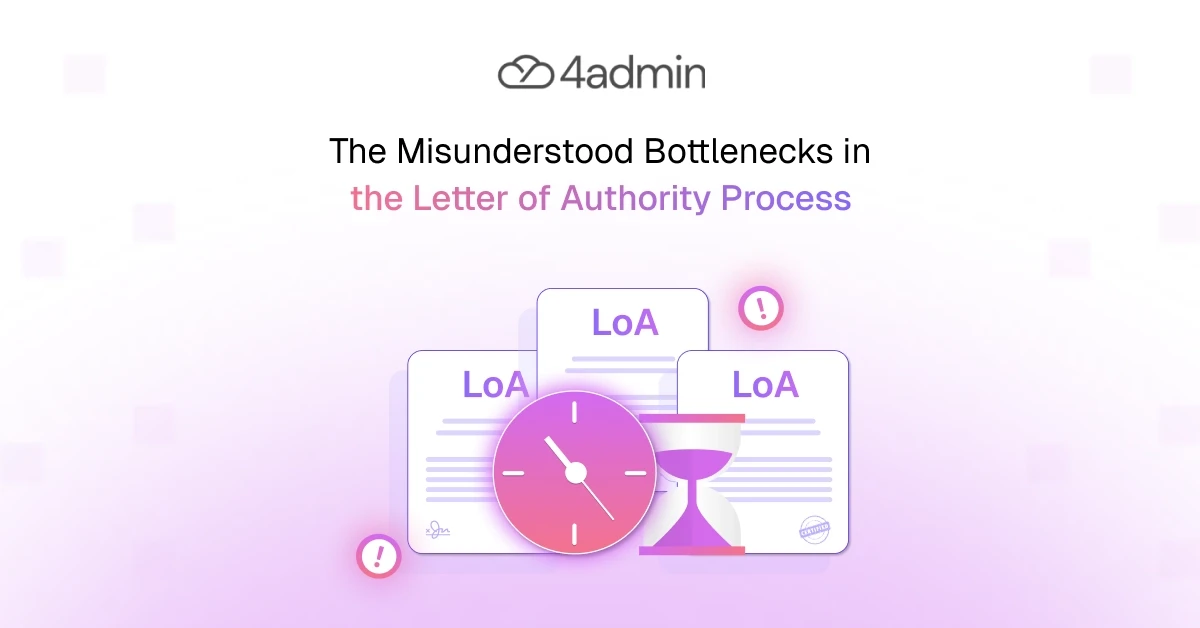
Most advice firms talk about the “LoA problem” as if it starts and ends with sending a Letter of Authority to a provider.
But that is only part of the issue.
The bigger problem is replacement business workflow. Once a client signs an LoA, the firm still has to submit it correctly, chase the provider, review the returned information, spot missing data, and update internal systems before advice can move forward.
That hidden operational space is the messy middle of LoAs.
It is where staff time disappears, cases stall, audit trails become fragmented, and firms lose visibility over transfer business.
Why the “LoA problem” is Bigger Than Just Sending Letters to Providers
Calling it an “LoA problem” can be misleading.
The LoA itself gets attention because it feels like something that should be simple. A client signs a letter, the firm sends it to the provider, and the provider returns the information.
But in practice, the waiting adds up, requirements differ by provider, responses are inconsistent, and the work does not stop when the letter is sent.
For advice firms, the real question is not only: “How quickly does the provider respond?”
It is also: “How much staff time are we spending across the whole replacement business process?”
That is where the real capacity issue appears.
Why Provider SLAs Are Only Part of the Problem
Provider SLAs are frustrating, and they clearly slow down transfer business.
But focusing only on provider SLAs can leave advice firms stuck waiting for change they do not control. Large institutions are unlikely to standardise their LoA processes quickly, and firms have limited influence over how each provider receives, processes, and returns information.
But that does not mean the whole process is outside the firm’s control.
The bigger opportunity is to look at the staff time spent after the LoA is signed. Submission is only one part of the workflow, and often not the most time-intensive part.
The real workload usually builds up in the stages that follow: chasing providers, tracking partial responses, reviewing provider packs, checking for missing information, extracting plan data, and re-keying that data into the CRM and other advice systems.
So the issue is not just, “How fast does the provider respond?”
It is also, “How well does the firm control everything that happens between the signed LoA and usable advice data?”
Waiting for providers to change is a choice to stay stuck. Advice firms control more of the messy middle than they often realise, and that is where the practical opportunity for improvement sits now.
The 4 Layers of LoA and Transfer Business Work
LoAs are not one admin task. They are 4 connected layers, including:
1. Submission
This is the part most people think of first.
The firm needs to get the LoA accepted by the provider. That means using the right address, the right format, the right signature method, and the correct agency details.
Common issues include:
Wrong provider address or team
Wrong LoA version
Wet signature required
DocuSign rejected
Agency not recognised
Plan type routed incorrectly
This creates rejection loops before the process has even properly started.
But submission is not usually the largest time cost.
2. Chasing
Once the LoA has been submitted, someone needs to keep the case moving.
This is where firms often rely on inboxes, spreadsheets, reminders, individual knowledge, and manual follow-up.
The problem is not just that chasing takes time. It is that chasing can become invisible.
If there is no central view, firms may not know which cases are waiting, which providers have responded, which responses are partial, and which cases need action.
3. Analysis
When the provider pack arrives, the firm still needs to make sense of it.
Every provider returns information differently. Some send long PDFs. Some data may be missing. Charges, guarantees, funds, valuations, plan details, and policy information may be hard to find or inconsistently presented.
This is often where skilled admin staff, paraplanners, or advisers get pulled into manual checking.
That matters because the firm is not only losing time. It is using valuable people to do repetitive data extraction and document review.
4. CRM and System Update
The final layer is turning provider information into usable business data.
This should not be viewed only as “updating the CRM.” The bigger issue is re-keying the same structured plan data into every system the firm uses to deliver advice, reporting, and compliance.
For many advice firms, that means entering provider information into the CRM, then again into tools such as Selectapension, Genovo, cashflow planning software, report writing tools, and internal workflow systems.
This is where a lot of the hidden admin sits. Once the firm has the information, it still has to be moved into the places where suitability reports, comparisons, compliance checks, and case decisions happen.
If this is handled manually, it creates duplication, stale data, incomplete records, and inconsistent case visibility.
The Hidden Cost Beyond Time: Audit Trail, Visibility, and Case Control
Beyond time, the bigger issue is control.
When LoA work is managed through inboxes, spreadsheets, reminders, and individual knowledge, firms lose visibility over what is actually happening across cases.
That creates problems beyond delay.
Common risks include:
No clear audit trail of what was sent, chased, received, or missing
Case updates sitting in individual inboxes
Provider responses being hard to track
Missing information not being logged consistently
Handovers becoming difficult when staff are off or busy
Leadership having limited visibility over where cases are stuck
This means the firm is not only spending time on admin.
It is also running a process that is hard to measure, hard to manage, and hard to scale.
Related Reading: How to Automate LoA Processing Without Breaking FCA Audit Rules
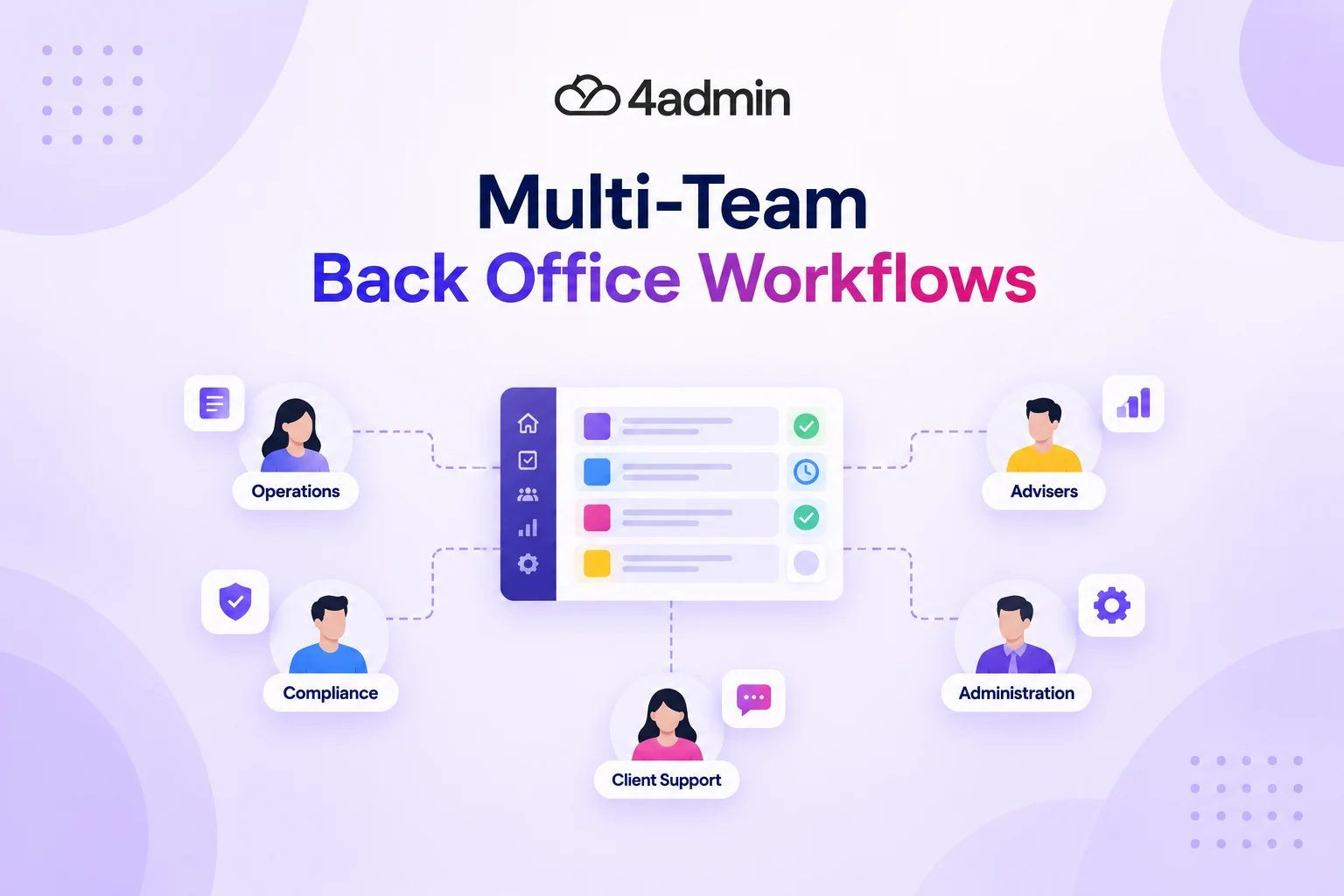
Why the Messy Middle Affects Everyone in the Firm
LoA and replacement business admin is often pushed onto admin teams or newer staff members.
But the impact is much wider than admin. It also affects:
Admin and operations teams
Admin teams carry much of the day-to-day workload.
They deal with rejected LoAs, provider chasing, inbox chaos, missing information, repeated checks, and unclear case status.
For them, better workflow means less manual chasing, fewer repetitive tasks, and clearer control over the process.
Paraplanners
Paraplanners need clean, complete plan data.
If provider packs are inconsistent, incomplete, or hard to review, paraplanners spend more time checking information before advice work can move forward.
Better provider-pack analysis and structured data extraction helps them work from cleaner information sooner.
Advisers and planners
Advisers own the client relationship.
When LoA work stalls, advice conversations are delayed. Clients wait longer. Advisers have less confidence in case status and less time for client-facing work.
A better LoA process helps advisers get to the advice conversation faster.
Leadership and consolidators
Leadership needs visibility, consistency, and control.
If LoA work is spread across inboxes and manual trackers, it becomes difficult to measure performance, manage capacity, spot bottlenecks, reduce risk, or scale transfer business.
For growing firms and consolidators, this matters even more.
Replacement business needs to become a measurable operating process, not a people-dependent admin burden.
Why Waiting for Provider Standardisation Keeps Firms Stuck
In theory, every provider would accept the same format, follow the same signature rules, respond within a clear timeframe, and return complete information in a consistent structure.
But that is not how the process works today.
Providers still vary by:
LoA format
Signature requirements
Submission route
Response time
Pack structure
Data quality
The problem is also asymmetric.
The receiving advice firm carries the cost of delay through stalled advice, client frustration, repeated chasing, and lost staff time. The ceding provider has far less urgency and the firm has limited leverage to change that.
So what can the firm control now?
That is improving how LoAs are submitted, chased, reviewed, checked, and turned into usable data.
The Problem With Running LoAs Through Manual Workarounds
Most firms already have workarounds for LoA and provider-pack admin.
They often use shared inboxes, spreadsheets, manual task lists, calendar reminders or provider-specific notes.
These workarounds may keep cases moving, but they do not solve the underlying problem.
They usually create a process that depends too heavily on people.
That works until:
Case volumes increase
A key team member is unavailable
A provider changes its requirements
A client book is acquired
More advisers join the firm
The admin team becomes stretched
Leadership needs better management information
At that point, the workaround becomes the bottleneck.
The firm has more replacement business to process, but the workflow still relies on manual chasing, manual reading, manual checking, and manual re-keying.
Related Reading: Manual vs Automated LoA Processing
What Better LoA Workflow Looks Like in Practice
In practice, a better LoA workflow helps the firm answer simple questions across each layer of the process:
Layer 1: Submission
Was the LoA accepted in the first go?
Was it sent to the right provider team?
Was the right form, signature, and client information included?
Layer 2: Chasing
Where is this case now?
What are we waiting for?
Has the provider responded?
Who needs to act next?
Layer 3: Analysis
Is anything missing from the provider pack?
Is the data complete enough for advice?
Are there any gaps that need to be chased before the case can move forward?
Layer 4: CRM and systems
Has the CRM been updated?
Has the same plan data been re-keyed into Selectapension, Genovo, cashflow planning, reporting, or workflow tools?
Where are delays happening across the business?
When firms can answer these questions consistently, LoA and transfer business stop being an asymmetric set of admin tasks.
They become a controlled operating process, with clearer ownership, better visibility, and fewer avoidable delays.
How 4admin Turns the Messy Middle Into a Controlled Workflow
4admin is built around the reality that provider variability exists.
Instead of waiting for every provider to standardise, 4admin helps firms manage the process as it is today.
It supports the workflow across submission, chasing, provider-pack analysis, missing-information checks, and CRM-ready data extraction.
That means firms can:
Reduce manual LoA admin
Improve visibility across cases
Capture a stronger audit trail
Reduce re-keying into other systems i.e. CRM’s, Selectapension, Genovo
Help paraplanners and advisers access cleaner data faster
Give leadership better management information
Free up staff capacity across replacement business
The point is not simply to automate LoAs.
The point is to control the messy middle between signed authority and usable advice data.
Conclusion
The LoA problem is not just about sending letters to providers.
The letter itself may be the visible starting point, but the real operational drag sits in the work that follows: chasing, analysis, missing data checks, and system updates.
Advice firms cannot control every provider response time. But they can control how they manage the process internally.
That is where time, capacity, visibility, and audit trail can improve now.
By taking control of the messy middle, firms can reduce manual admin, give advisers cleaner information faster, and turn replacement business into a more scalable, measurable workflow.
To see how 4admin helps firms control the messy middle of LoAs, book a demo with our team.
FAQs
How do poor LoA workflows affect audit trails and FCA compliance?
Poor LoA workflows create fragmented audit trails that fail FCA expectations by obscuring who did what, when, and why across submission, chasing, and data entry.
What controls should firms put in place to make replacement business auditable and resilient?
Firms should implement time-stamped activity logs, role-based approvals, built-in validation rules, automated escalations, and centralised document storage within their CRM workflow.
How can firms reduce re-keying and improve CRM data quality from provider packs?
Firms can use structured data extraction and automated import tools that capture provider-pack data directly into CRM and planning systems, eliminating manual re-entry and inconsistency.
What should I look for when choosing a tool to manage LoA and replacement business workflows?
Choose a tool like 4admin that covers all 4 layers (submission, chasing, analysis, CRM updates), provides strong audit trails, reduces manual admin, improves case visibility, and extracts CRM-ready data.
Can LoA workflow software integrate with CRM and planning tools?
Yes, modern LoA workflow software like 4admin integrates with CRM, Selectapension, Genovo, report-writing, and cashflow planning tools to reduce re-keying and improve data quality.
Ready to automate your admin processes?
Learn how you can reduce admin backlog, ensure compliance, and increase capacity.