
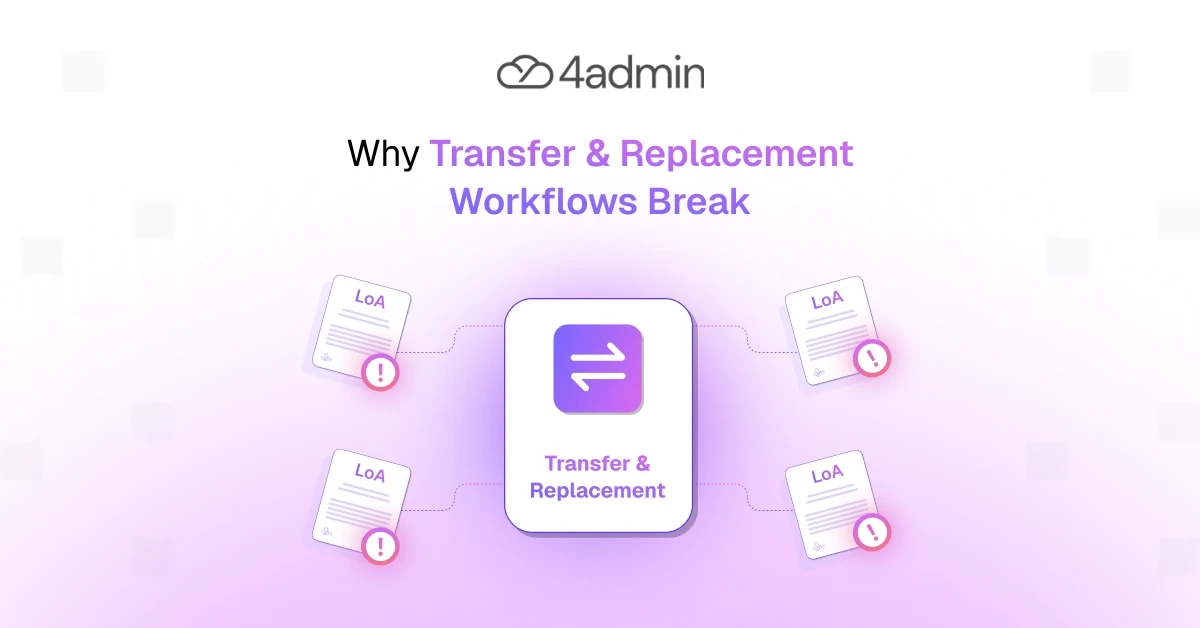
Transfer and replacement workflows don't break overnight. They break gradually, as more cases enter the pipeline, more teams become involved, and small manual inefficiencies start multiplying across the back office.
As firms grow, manual admin processes become harder to control. Cases stall, information gets lost between teams, duplicate work increases, and turnaround times begin to rise.
The problem is not growth itself. Growth simply exposes the weaknesses already built into the replacement business process.
This blog covers why transfer and replacement workflows break as firms scale, what the operational warning signs look like and what firms need to build a more scalable, visible and controlled process.
Why Transfer and Replacement Work Becomes More Complex as Firms Grow
Pension transfer and replacement business cases involve more than sending a Letter of Authority and waiting for a response. Each case may require provider information, policy documents, scheme details, transfer forms, charges, guarantees, suitability evidence and compliance records.
The process is also difficult to standardise because providers use different forms, portals, response formats and communication methods. Some return structured information, while others send lengthy PDFs or incomplete provider packs that administrators must interpret manually.
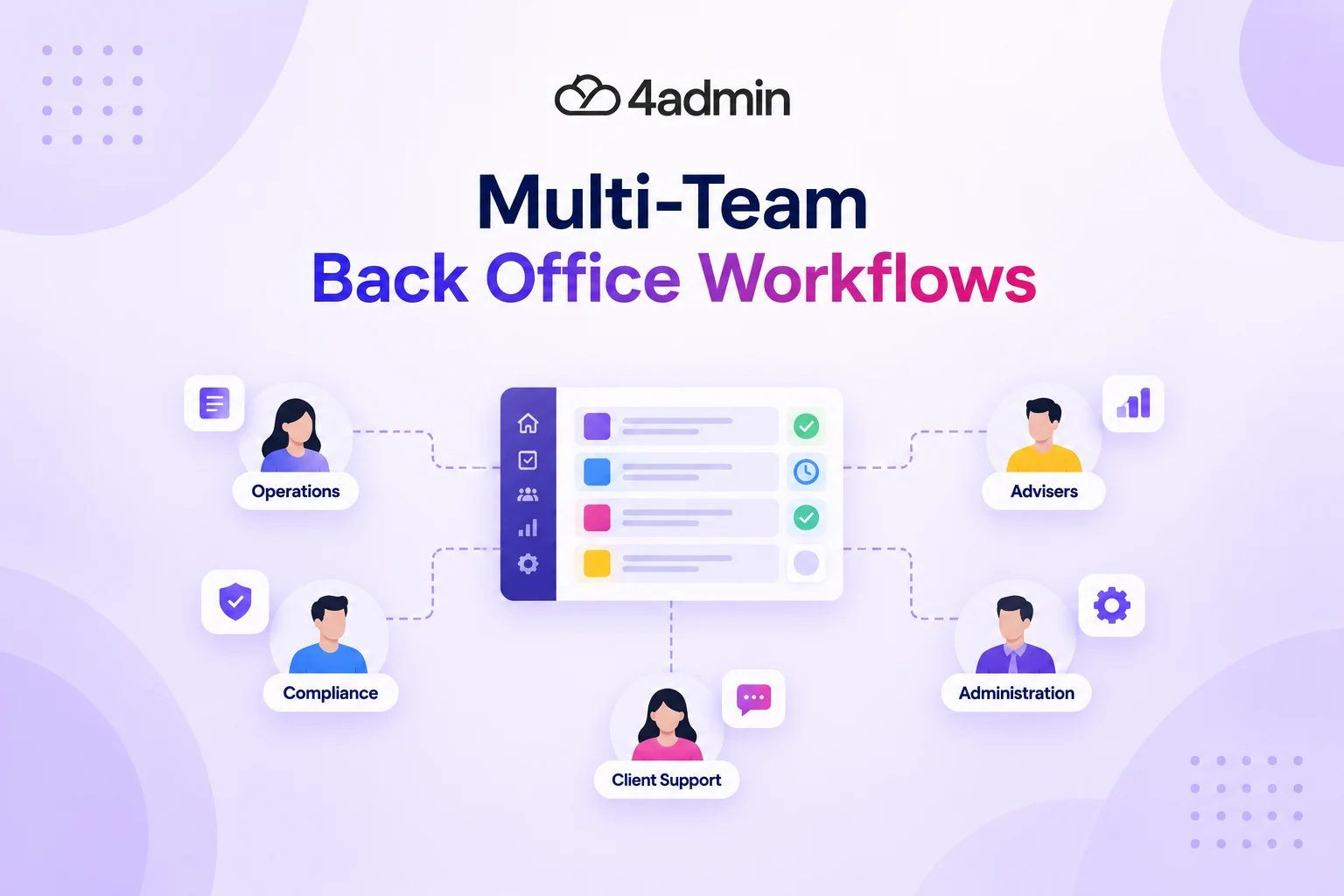
Each case may also pass through several teams, including:
Administration and operations
Advisers
Paraplanners
Compliance
External providers
At low volumes, staff can often coordinate these handovers manually. At higher volumes, coordination becomes a process bottleneck. Every handover creates another opportunity for delay, lost context, duplicate effort and unclear ownership.
7 Reasons Why Transfer and Replacement Workflows Break as Advice Firms Scale
The seven core reasons are:
1. Manual and Non-Standardised Case Processing
Many firms do not have one consistent replacement case workflow. Different advisers, administrators or offices may follow different processes depending on experience, preference or provider.
This can lead to:
Information being entered into several systems
Different checks being completed at different stages
Routine cases being treated as exceptions
Staff using their own spreadsheets or task lists
No consistent definition of when a stage is complete
A small variation may seem harmless when a firm handles a limited number of cases. At scale, those inconsistencies create rework, delays and unreliable case management.
Manual case processing also makes capacity difficult to predict. When every case is handled differently, workload management depends on staff judgement rather than a repeatable process.
2. Fragmented Systems and Data Silos
Transfer case management often takes place across several disconnected systems.
Provider communication may sit in personal or shared inboxes. Documents may be stored in shared drives, provider portals or CRM records. Case tracking may be managed through CRM tasks, while the information needed to progress the case sits somewhere else.
Staff then have to move between systems to understand:
What has been received
What is still outstanding
Who owns the next action
Whether the provider has been chased
Which information has already been checked
When the existing systems do not reflect the real workflow, teams create shadow processes in spreadsheets, email folders or personal notes. This further fragments the case record and makes a unified workflow across the firm harder to achieve.
3. Constant Client, Provider and Document Chasing
Transfer and replacement work involves repeated follow-up.
Teams may need to chase:
Signed Letters of Authority
Provider acknowledgements
Outstanding policy information
Missing forms or signatures
Incomplete provider packs
Updates on delayed responses
A few minutes of chasing one case may not seem significant. Across a growing pipeline, it becomes a major source of lost productivity.
The problem becomes worse when follow-ups depend on someone remembering a date or checking a spreadsheet. Cases can sit untouched because there is no automated prompt, escalation or clear owner.
4. Manual Handovers and Loss of Context
Transfer and replacement cases rarely stay with one person from start to finish. A case may move from administration to an adviser, then to paraplanning, compliance and back again.
At each stage, the next person needs to understand what has happened, what is missing and why certain decisions were made.
When this context is spread across emails, documents, CRM notes and conversations, teams may:
Recheck information that has already been reviewed
Ask clients or providers for the same information twice
Return cases for clarification
Miss previous decisions or supporting evidence
Leave cases waiting between teams
This handover friction increases turnaround time and creates rework without adding value to the client.
5. Dependence on Individual Knowledge
Many replacement business processes are held together by experienced staff.
A senior administrator may know which form a provider accepts. An adviser may know how to resolve a common exception. A team member may remember which cases need chasing that week.
This approach can work until:
Case volumes rise
A key employee is absent
Someone leaves the firm
New staff need to be trained
Provider requirements change
When process knowledge sits with individuals rather than within the workflow, operational scalability is limited. The firm cannot increase capacity reliably because performance depends on who is available and what they remember.
6. Compliance and Suitability Checks Happen Too Late
Missing evidence is often identified only when a case reaches scheme analysis, suitability review or final compliance checks.
By that point, the case may need to be returned because:
Provider information is incomplete
A figure cannot be verified
The source of information is unclear
Required evidence has not been captured
Documents are inconsistent or out of date
Compliance is not necessarily the bottleneck. The real issue is that evidence, validation and control were not embedded into the workflow from the beginning.
Late-stage checks create queues and rework because problems are discovered after significant time has already been spent on the case.
7. Limited Case Visibility
CRM tasks may show that activity has happened, but they do not always show the true status of the case.
A firm may be unable to see:
Which provider response is outstanding
Who owns the current action
How long the case has remained at one stage
Whether information is complete
What needs to happen next
Where the backlog is building
Without meaningful case tracking, process bottlenecks remain hidden until turnaround times increase, advisers start chasing internally, or clients complain.
Effective transfer case management needs to show progress, ownership, outstanding information, next actions and time spent at each stage.
How Workflow Breakdowns Appear in Day-to-Day Case Management
Broken workflows usually appear through familiar operational problems:
LOA limbo: A Letter of Authority has been signed, but submission, acceptance or provider follow-up is delayed.
The messy middle: Provider documents have arrived, but the information is spread across emails, PDFs, spreadsheets and CRM tasks.
Transfer black holes: A case appears to be in progress, but no one can identify the outstanding item or next action.
Rework loops: Paraplanners or compliance teams return cases because information is incomplete, inconsistent or unsupported.
Growing backlogs: The firm hires more staff, but case capacity and turnaround time do not improve proportionately.
The Business Cost of Scaling a Broken Workflow
When a weak replacement business process is scaled, the cost affects more than the back office, including:
Slower Cases and Delayed Revenue
Cases spend longer waiting between stages. Missing information is discovered later, internal delays compound provider delays, and transfers take longer to complete. This can delay client progress and fee realisation.
Higher Administrative Cost per Case
Manual data entry, repeated checking, provider chasing and document handling increase the amount of work required for every case. If each new case needs the same level of manual effort, costs rise alongside volume.
Reduced Adviser and Team Productivity
Advisers may chase providers, resolve routine exceptions or search for missing information. Paraplanners and compliance teams may repeat checks that should have been completed earlier. Skilled staff spend more time on case processing and less time on higher-value work.
Greater Compliance and Client-Service Risk
Fragmented provider communication and incomplete records make it harder to demonstrate what happened, when it happened and why. Clients receive reactive updates because the firm lacks a clear view of the case.
What a Scalable Transfer and Replacement Workflow Requires
A scalable workflow should include:
Standardised case stages: Clear inputs, outputs, owners and completion criteria for each stage.
A unified workflow across the firm: Letters of Authority, provider communication, documents, case data and CRM updates connected within one process.
Automated communication and follow-ups: Workflow automation that triggers chasing based on case status, expected response dates and overdue actions.
Automated document and data processing: Structured data extracted from provider packs, with missing information identified earlier.
Clear ownership and exception management: Routine work follows standard paths, while genuine exceptions are escalated to the right person.
Compliance embedded throughout: Evidence, approvals and validation captured as the case progresses.
Meaningful case management metrics: Backlog by stage, provider waiting time, missing-information rates, rework, error rates and processing capacity.
How 4admin Supports Scalable Transfer and Replacement Workflows
4admin does not add another silo. It runs inside the firm's own Microsoft 365 environment, so Letters of Authority go out from your own Outlook and the case record stays connected to the CRM you already use.
It helps advice firms build a more controlled and unified workflow across the firm by:
Centralising Letter of Authority activity, provider communication, case tracking and outstanding actions in one place
Automating provider chasing and follow-ups, and tracking case status, ownership and turnaround time
Extracting and structuring information from provider packs, and identifying missing information earlier
Reducing manual data entry and duplicate effort, and supplying complete provider data for scheme analysis and paraplanning
Maintaining a clear operational and compliance audit trail
This allows firms to increase case volume without increasing administrative workload at the same rate.
Conclusion
Transfer and replacement workflows do not suddenly fail because a firm grows. Growth exposes processes that were already manual, fragmented, inconsistent and dependent on individual effort.
To improve operational scalability, firms need standardised case processing, unified case management, automated follow-ups, structured provider data, clear ownership and embedded controls.
Without redesigning the workflow, higher case volumes simply create larger backlogs, longer turnaround times and higher operating costs.
Frequently Asked Questions
Why do turnaround times increase with more transfer cases?
Manual handovers, duplicated chasing and late-stage rework all multiply as volume grows. Each additional case compounds the waiting time already built into the process, so turnaround extends faster than the caseload does.
What are the warning signs of a broken replacement workflow?
The common signs are LOA limbo, document sprawl across emails, PDFs and spreadsheets, and cases that appear to be in progress but have no clear owner or next action. Rising rework from compliance and paraplanning teams is another, as are backlogs that grow faster than headcount.
What is the root cause of transfer black holes?
Limited end-to-end case visibility. Without a unified view of stage status, outstanding provider items, ownership and time spent, a case can appear to be in progress while it stalls invisibly.
Can hiring more admins fix slow transfers?
Not reliably. Without standardised stages and workflow automation, extra headcount scales the same manual effort and the same shadow processes, so capacity and turnaround time do not improve proportionately.
What compliance risks increase with fragmented provider communication?
The main risk is being unable to demonstrate what happened on a case, when it happened and why. Fragmented records make it harder to evidence the firm's decisions if they are ever questioned, and they increase the likelihood of delays and incomplete case files.
See how 4admin helps advice firms reduce transfer and replacement bottlenecks, improve case visibility and scale without increasing administrative workload at the same rate. Book a demo with 4admin.
Ready to automate your admin processes?
Learn how you can reduce admin backlog, ensure compliance, and increase capacity.