
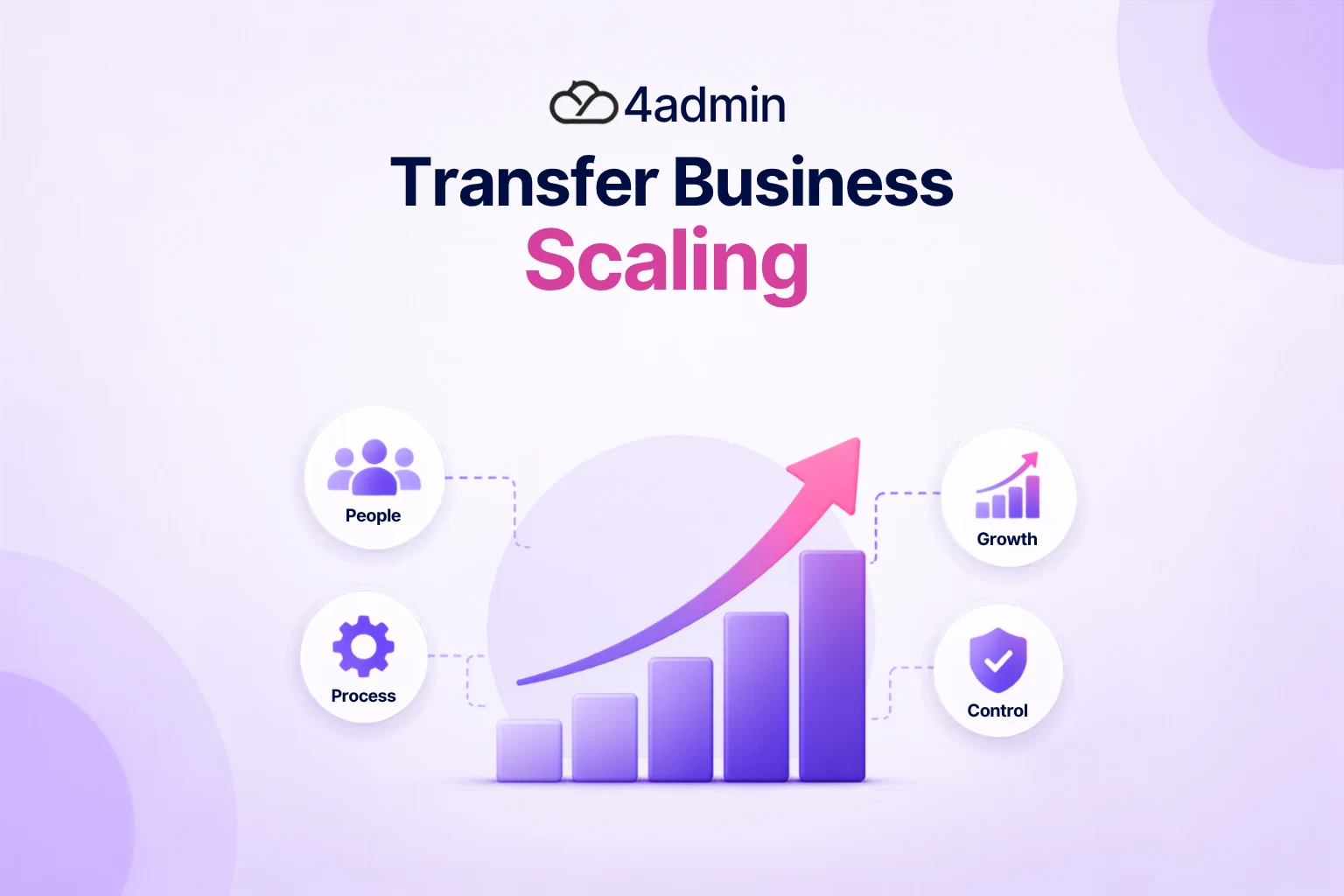
Scaling transfer business without losing operational control requires more than adding people. Advice firms need standardised workflows, clear case ownership, workflow automation, central visibility, and controls that remain effective as volumes rise.
This matters across pension transfer and replacement business. More cases mean more provider requests, documents, chasing, data checks, and handoffs between the back office, adviser, paraplanner, and compliance teams.
The goal is not to automate every task. It is to increase capacity without letting manual work, delays, headcount, and compliance risk grow at the same rate.
This guide explains why transfer operations become harder to manage as advice firms grow and shows how to scale them while keeping case visibility, service levels, and operational control in place.
What Does Operational Control Mean in a Transfer Business?
Operational control means knowing where each transfer case sits, who owns it, and what needs to happen next. It also means spotting delays, missing information, and stalled actions before they hold up the wider case.
For a transfer or replacement business workflow, that visibility should cover:
Current case stage and owner
Outstanding provider information
Last provider response
Next action
Required checks
Internal and provider delays
Exceptions
Service-level agreement status
A CRM may contain the client record and key case information. However, staff may still rely on emails, spreadsheets, provider portals, documents, and personal reminders to manage the actual workflow.
That makes control harder as volume grows. A case management system or connected workflow should make the current position clear without staff having to rebuild the case history manually.
Operational control also reduces dependence on individual knowledge. A case should not stop moving because one administrator is absent or only one person knows what needs to happen next.
Why Transfer Volume Gets Harder to Manage as Advice Firms Grow
Higher transfer volumes expose manual processes that were easier to manage when the firm handled fewer cases. Small inefficiencies start affecting more clients and more people across the back office.
One client may hold pensions or investments with several providers. As advice firms grow, LoA volumes, provider communication, returned documents, and data processing can therefore rise quickly.
Each case may pass between an administrator, adviser, paraplanner, compliance team, and provider. Every handoff creates another point where work can wait or important context can be missed.
Provider information arrives through different documents, portals, emails, and formats. Staff then need to organise and check that information before the case can progress.
The pressure appears when higher volume enters a workflow that still depends heavily on manual chasing, repeated data entry, and individual knowledge.
Red Flags Your Transfer Operation is Losing Control
Growing backlogs, unclear ownership, and repeated manual chasing are strong red flags that the transfer process is struggling with volume. These problems often appear before a firm reaches a serious capacity issue.
Common warning signs include:
Staff keep separate spreadsheets or personal trackers.
Case status takes too long to confirm.
Provider responses sit unnoticed.
Chasing depends on someone remembering a date.
Different administrators follow different processes.
Cases repeatedly pass an internal service-level agreement.
Paraplanners receive incomplete provider information.
The same data gets entered into several systems.
Compliance issues appear late in the process.
Advisers chase the back office for routine updates.
One employee holds most of the process knowledge.
Headcount rises without a similar improvement in turnaround time.
One red flag may have a simple cause. Several appearing together usually show that the operating model needs attention before more volume is added.
The most important signal is loss of visibility. If managers cannot quickly see what is waiting, why it is waiting, and who owns the next action, control is already weakening.
Why More Headcount Does Not Fix a Broken Workflow
More headcount can add genuine capacity, but it does not remove unnecessary manual work. If every new transfer needs the same chasing, re-keying, checking, and status updates, administrative effort continues to rise with volume.
Hiring into an inconsistent process can also create more coordination work. More people mean more handoffs and more opportunities for different working methods.
The better starting point is the workflow itself. Firms should identify repeated tasks, unclear handoffs, duplicate data entry, and stages where cases repeatedly wait.
Then they can standardise the process and use workflow automation where it makes sense. Once that work is done, management can see where extra people or specialist expertise are genuinely required.
This does not mean firms should avoid hiring. It means headcount should solve a real capacity problem rather than compensate for preventable administration.
7 Ways to Scale Transfer Business Without Losing Operational Control
To scale transfer business without losing operational control, advice firms need a workflow that stays consistent, visible, and easy to manage. That means standardising core steps, setting clear ownership, centralising case data, automating repetitive admin, managing exceptions early, tracking service levels, and keeping a clear audit trail as volumes grow.
1. Standardise Core Transfer Workflows
Standardised workflows give similar transfer cases a consistent route through the firm. Each stage should have a defined owner, required information, and clear completion criteria.
A typical transfer or replacement workflow may include LoA submission, provider response, provider pack review, missing-information checks, data validation, and a paraplanning handoff. The exact stages will depend on the firm's own operating model.
The important point is consistency. Staff should not have to decide from scratch how every routine case should progress.
Standardisation should come before automation. Automating a poorly defined process can move the same errors and unclear handoffs faster without fixing them.
2. Set Clear Case Ownership and Handoffs
Every transfer case should have a clear current owner and next action. Staff should also know exactly when responsibility moves to another person or team.
This is especially important when work passes between the back office, adviser, paraplanner, and compliance. The receiving person should know what must be complete before the case reaches them.
For example, a paraplanner should not discover late that an important provider document or policy detail is still missing. That gap should be identified before the handoff.
Clear ownership also makes delays easier to investigate. Operations teams can see whether a case is waiting on a provider or waiting inside the firm.
3. Centralise Case Status and Provider Data
A growing advice firm needs one reliable view of transfer activity. Staff should not have to search several systems just to understand the current case position.
A case management system should make key information easy to find, including:
Current stage
Case owner
Provider responses
Missing information
Documents received
Next action
Last follow-up
Service-level status
Exceptions
The CRM should remain connected to this process. Staff should not need to maintain one version of the case in the CRM and another in separate spreadsheets or inboxes.
Central visibility also helps management understand capacity. Leaders can see where work is building up instead of relying on individual updates.
4. Automate Repetitive Back-Office Work
Workflow automation should reduce repeatable admin while keeping advice and judgement with the right people. Suitable tasks include LoA tracking, provider chasing, data extraction, missing-information checks, task routing, and CRM updates.
This helps firms handle more transfer and replacement business without increasing back-office headcount at the same rate.
Transfer Activity | Manual Approach | More Scalable Approach |
LoA Tracking | Spreadsheet or inbox checks | Central case tracking |
Provider Chasing | Staff reminders | Workflow-based follow-ups |
Provider Packs | Manual reading and re-keying | Structured extraction and checks |
Missing Information | Found later | Flagged earlier |
Case Ownership | Emails and conversations | Named workflow owner |
Handoffs | Informal transfer | Defined handoff rules |
CRM Updates | Manual re-keying | Structured CRM updates |
Exceptions | Found through manual checks | Flagged for review |
Audit Trail | Rebuilt later | Recorded during the process |
Advice Decisions | Human judgement | Human judgement |
Automation should not replace financial advice, suitability decisions, complex exceptions, or required compliance judgement. Those should remain with the appropriate people.
5. Manage Exceptions Before They Cause Delays
Exception management lets staff focus on cases that genuinely need intervention. Routine cases can follow the normal workflow without someone manually checking them at every stage.
An exception could include:
A rejected LoA
A missing client signature
An overdue provider response
An incomplete provider pack
Conflicting policy data
A failed data check
Missing safeguarded benefit information
A case outside its service-level agreement
A case requiring compliance review
This is different from losing human control. The process still brings unusual, overdue, or higher-risk cases to the right person's attention.
It also reduces key-person risk. Problems become visible through the workflow instead of depending on one experienced administrator remembering them.
6. Track Service Levels and Case Delays
Service-level agreements (SLAs) help firms see when a workflow stage is taking longer than expected. They work best when each stage also has a clear owner and escalation point.
Firms should separate provider waiting time from internal processing time. The two delays have different causes and need different responses.
For example, the firm cannot control how quickly a provider returns a pension pack. It can control how long that information waits before someone reviews it.
This distinction makes performance data more useful. Management can see whether delays come from an external dependency or from internal capacity.
7. Keep a Clear Audit Trail
A clear audit trail should develop while the transfer case is being processed. Staff should not have to reconstruct the history later from emails and separate records.
Useful records can include:
LoA submissions
Provider acknowledgements
Follow-ups
Provider documents
Data sources
Missing-information requests
Validation checks
Handoffs
Approvals
Exceptions
Escalations
CRM updates
Good records become particularly important in pension transfer work. FCA guidance on DB transfer advice highlights weak record keeping and material information gaps as issues that can make it difficult to assess whether suitable advice was given.
An audit trail does not make a case compliant on its own. It gives the firm clearer evidence of what happened during the operational process.
How FCA Requirements and Consumer Duty Affect Scaling
Higher transfer volume does not reduce an advice firm's regulatory responsibilities. Firms still need clear records, strong oversight, and consistent controls as case numbers grow.
This is especially important in pension transfer work. The FCA says advice on a defined benefit (DB) pension transfer is complex, so firms need the right information and specialist input before cases move forward.
Consumer Duty also matters when firms scale. Firms should monitor whether internal delays, poor handoffs, or weak support are affecting client outcomes.
Not every provider delay is an internal problem. However, firms should be able to see when a delay comes from their own process and act before it becomes a wider service issue.
Which Metrics Show Whether Transfer Operations Are Scaling?
The right metrics show whether higher transfer volume is improving capacity or creating new delays and backlogs. Firms should track measures that reveal where cases are slowing, where rework is increasing, and where internal capacity is under pressure.
Metric | What it Shows |
Cases by workflow stage | Where work is building up |
Backlog by stage | Where capacity is under pressure |
Provider response time | How much waiting happens outside the firm |
Internal processing time | How quickly ready work progresses |
Cases outside SLA | Where intervention may be needed |
Rework rate | Whether handoffs are working properly |
Cases per administrator | How workload changes as volume grows |
End-to-end turnaround time | Overall transfer process performance |
These measures give operations teams a clearer view of where the transfer process needs attention. A growing internal backlog may point to a capacity issue, while a rising rework rate may show that cases are moving forward before the required information is complete.
How 4admin Helps Firms Scale Transfer Operations
4admin helps advice firms increase transfer and replacement business capacity by reducing repetitive back-office work. It brings provider information, case activity, workflow steps, and CRM updates into a more structured process.
For LoA workflows, 4admin can analyse returned provider packs, structure and check provider data, flag missing information, support provider chasing, and update the firm's CRM.
4admin can help firms:
Track LoA and case progress
Manage provider communication
Automate routine follow-ups
Structure and check provider data
Keep case ownership clear
Connect workflow updates with existing systems
This helps firms handle more transfer work without increasing administrative headcount at the same rate. Advice, suitability decisions, and compliance responsibilities remain with the appropriate people.
Bottom Line
To scale transfer business without losing operational control, advice firms need to improve the operating model before simply pushing more cases through it. Standard workflows, clear ownership, central case visibility, workflow automation, service-level monitoring, and a reliable audit trail make higher volumes easier to manage.
The strongest model removes unnecessary manual work while keeping people focused on exceptions, advice, and oversight. This helps adviser firm growth without allowing back-office workload, headcount, delays, and compliance risk to increase at the same rate.
Frequently Asked Questions
How can an advice firm scale transfer business without losing control?
An advice firm can scale transfer business by standardising case stages, assigning clear ownership, automating repetitive administration, and centralising case visibility. Service levels, exceptions, provider data, and audit records should also remain visible as volume grows.
What are the main red flags that transfer operations are struggling?
Common red flags include rising backlogs, missed follow-ups, unclear ownership, repeated data entry, cases outside internal service levels, and frequent rework. Staff relying on personal spreadsheets or individual knowledge is another sign that the process may not scale well.
Can workflow automation reduce headcount pressure?
Workflow automation can reduce repetitive work per case and help the existing team handle more volume. Firms may still need additional staff, but hiring can then focus on real capacity or specialist needs rather than preventable administration.
What should a transfer case management system track?
A transfer case management system should show the current stage, owner, next action, provider responses, missing information, documents, service-level position, and exceptions. Staff should be able to understand what is happening without checking several disconnected sources.
Why is an audit trail important when transfer volumes increase?
A clear audit trail helps the firm understand what happened during a case without reconstructing events from several systems. It supports internal review, accountability, issue investigation, and stronger evidence when operational or compliance questions arise.
How does Consumer Duty relate to transfer case management?
Consumer Duty requires firms within scope to consider and monitor the outcomes retail customers receive. Transfer case data can help firms identify whether internal delays, poor support, or recurring operational problems are affecting the client experience, although firms must assess those issues within their own regulatory responsibilities.
When should an advice firm add more back-office staff?
An advice firm should add staff when the remaining workload genuinely requires more human capacity or expertise after avoidable manual work has been addressed. Reviewing workflow stages, rework, manual touches, backlog, and cases per administrator can help distinguish a staffing problem from a process problem.
Ready to automate your admin processes?
Learn how you can reduce admin backlog, ensure compliance, and increase capacity.