

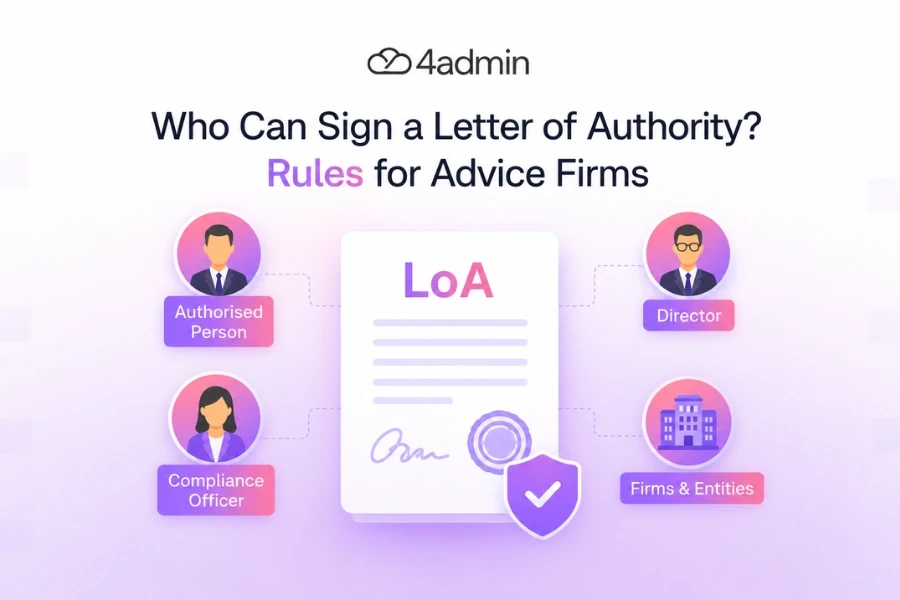
A Letter of Authority is only useful if it is signed by the right person.
For advice firms, this sounds simple. But in practice, signature issues are one of the common reasons providers reject LoAs. A provider may refuse the document if the wrong person signed it, the signature is too old, the name does not match their records, or the signer’s authority is unclear.
In most cases, the person who owns the policy, plan, account, or product should sign the Letter of Authority. For business or trust cases, the signer must be someone with proper authority to act for that entity or arrangement.
This blog explains who can sign a Letter of Authority, why the correct signature matters, and how advice firms can reduce delays caused by rejected LoAs.
Who Can Sign a Letter of Authority?
A Letter of Authority should usually be signed by the person who has the legal or recognised authority over the product, policy, account, or plan.
For an individual client, this is normally the policyholder, planholder, account holder, pension holder, or investment owner.
For a business, it should be signed by someone authorised to act for the company, partnership, or organisation. This may be a director, partner, owner, authorised signatory, or another person accepted by the provider.
For a trust, the trustees may need to sign. In some cases, all trustees may be required.
The exact rule depends on the provider, the product type, and the wording of the LoA.
Why the Right Signature Matters?
The signature is the provider’s evidence that the client has given permission.
Without the correct signature, the provider may not release information to the adviser or advice firm. This is especially important where the LoA is being used to access personal, pension, investment, or insurance information.
Providers need to be careful because they must protect client data and make sure they are dealing with the right authorised party. The ICO explains that consent does not have one fixed time limit and should be reviewed or refreshed depending on the context. It also explains that where consent is relied on, it can be withdrawn.
So, if the signer is wrong or unclear, the provider may reject the LoA instead of taking the risk.
Who Can Sign for an Individual Client?
For an individual client, the LoA should normally be signed by the person who owns or controls the product.
This may include the:
Policyholder
Pension planholder
Investment account holder
Insurance policy owner
Bank or platform account holder
Client named on the provider’s records
For example, Standard Life says Letters of Authority or Change of Agency requests must be signed and dated by the planholder, and the document must be less than six months old. It also says it can receive wet signatures or digital e-signatures.
This shows why firms should not assume every signature will be accepted. The provider will usually check the signer against its own records.
Who Can Sign for Joint Clients?
If a product is jointly owned, one signature may not be enough.
For example, if an investment account, insurance policy, or platform account is held in joint names, the provider may require both holders to sign the LoA. Some providers may accept one signature for limited information access, but others may require all account holders to give authority.
The safest approach is to check the provider’s requirement before submission.
If one joint holder signs but another required signature is missing, the provider may reject the LoA and ask for a corrected version.
Who Can Sign for a Business?
For a business LoA, the signer should be someone with authority to act for the business.
This may include:
Company director
Business owner
Partner
Sole trader
Authorised signatory
Senior manager with delegated authority
Company secretary, where relevant
The key point is that the signer’s role should be clear. A provider may not accept a signature if the person’s authority is uncertain.
For example, if an employee signs the LoA but the provider cannot confirm that the employee is authorised, the request may be delayed or rejected.
A business LoA should clearly include the signer’s name, role, company name, signature, and date.
Can an Adviser Sign on Behalf of a Client?
Usually, no.
A financial adviser should not normally sign a client’s Letter of Authority on the client’s behalf. The purpose of the LoA is to show that the client has given permission to the adviser or firm.
If the adviser signs instead of the client, the provider may treat the LoA as invalid.
The only exception would be where there is separate legal authority allowing someone else to act for the client. Even then, the provider will usually ask for evidence.
Can Someone with Power of Attorney Sign?
Yes, someone with valid Power of Attorney may be able to sign a Letter of Authority for the client.
But the provider will usually need proof. This may include a registered Power of Attorney document or provider-specific evidence.
A property and financial affairs Lasting Power of Attorney can allow an attorney to make or help make decisions about money, tax, bank accounts, property, investments, pensions, and benefits. GOV.UK explains that an attorney can act if the LPA allows it and the donor gives permission while they still have mental capacity.
So, if an attorney signs an LoA, the advice firm should make sure the supporting authority is available before sending the request.
Can a Trustee Sign a Letter of Authority?
Yes, a trustee can sign where the policy, plan, investment, or account is held under a trust.
However, trustee cases can be more complex. Some providers may require all trustees to sign. Others may accept signatures from specific trustees if the trust documentation allows it.
The firm should check:
Who the current trustees are
Whether all trustees need to sign
Whether the trust deed gives signing authority
Whether the provider needs trustee evidence
Whether any trustee has changed
If trustee authority is unclear, the provider may reject the LoA or request further documents.
Can a Company Employee Sign an LoA?
A company employee can sign only if they are authorised to do so.
Job title alone may not be enough. For example, a finance manager or operations manager may deal with business records day to day, but the provider may still want proof that they can authorise access to policy or account information.
This is why business LoAs should not only include a signature. They should also include the signer’s role and capacity.
If needed, the firm may also ask the client business for written confirmation that the employee is authorised to sign.
What If the Wrong Person Signs?
If the wrong person signs the LoA, the provider may reject it.
This can create several problems:
The provider refuses to release information
The adviser has to contact the client again
A new LoA must be prepared and signed
The case timeline slows down
Admin work is duplicated
The client may become frustrated
The audit trail becomes weaker
For advice firms, this is not just a document issue. It is a workflow issue.
A rejected signature can delay onboarding, pension reviews, replacement business, transfer analysis, annual reviews, and provider follow-ups.
What Details Should the Signer Include?
The signer should include enough detail to help the provider confirm their identity and authority.
A strong LoA should usually include:
Full name of the client or business
Name of the authorised adviser or firm
Product, policy, or account reference
Signature
Date of signature
Signer’s role or capacity
Company name, if business-related
Contact details, if required
Clear scope of authority
The signature date is especially important. Some providers reject LoAs because the signature is too old. Standard Life, for example, requires LoA or Change of Agency requests to be signed, dated, and less than six months old.
Common Reasons Providers Reject LoA Signatures
Providers may reject a Letter of Authority for simple but costly reasons.
Common problems include:
The signature is missing
The signature date is missing
The wrong person signed
The name does not match provider records
The signature is too old
A joint holder signature is missing
The signer’s business role is unclear
Power of Attorney evidence is missing
Trustee authority is unclear
The provider does not accept the signature format
The LoA wording does not match the request
Many of these issues can be prevented before submission.
Related Reading: The Most Common LoA Errors UK Advice Firms Make
Wet Signature vs Digital Signature
Advice firms should not assume that every provider accepts the same signing method. Some providers accept digital signatures, while others may still ask for a wet signature or a specific e-signature format.
Signature Type | What It Means | When It May Be Accepted | Possible Issue |
Wet signature | A handwritten signature added to a printed document. | Often accepted by most providers because it is the traditional signing method. | It can slow the process if the client needs to print, sign, scan, or post the document. |
Digital signature | A signature added electronically, often through an e-signing tool or digital document process. | Some providers accept it, especially if the document is clear, dated, and traceable. | Some providers may reject it if they do not accept that signing method or need a wet signature. |
The safest approach is to check the provider’s signing rules before sending the LoA to the client. This helps avoid asking the client to sign the same document again in a different format.
How Advice Firms Can Avoid Signature Delays
Advice firms can avoid many LoA signature delays by checking signer authority before the document is sent.
A good process should include:
Confirming who owns the product
Checking whether joint signatures are needed
Confirming the signer’s business role
Checking whether Power of Attorney evidence is needed
Confirming trustee requirements
Recording the signature date
Checking provider-specific rules
Tracking rejected LoAs clearly
Reviewing inactive cases before using older authority
This also supports a better client experience. Under Consumer Duty, the FCA expects firms to act in good faith, avoid foreseeable harm, and support customers in pursuing their financial objectives. Poor LoA handling does not automatically create a Consumer Duty issue, but avoidable delays can still create friction in the advice journey.
How 4admin Helps Firms Manage LoA Signatures
4admin helps advice firms manage LoA workflows with better structure and visibility.
Instead of relying on inboxes, spreadsheets, and manual reminders, firms can centralise LoA tracking and see where each request sits.
4admin can support firms with:
LoA submission tracking
Signature checks
Provider follow-ups
Rejection tracking
Document handling
Workflow visibility
Data extraction from provider responses
CRM-ready outputs
This helps teams spot issues earlier. If a signature is missing, outdated, or rejected, the firm can act before the delay spreads across the case.
For firms dealing with pensions, investments, insurance policies, and provider-heavy onboarding, this can save time and reduce back-office pressure.
4admin gives firms a faster, more efficient way to handle provider documents through Letter of Authority Automation. Let’s book a free call today to see how 4admin fits into your existing workflow.
Bottom Line
A Letter of Authority should be signed by the person with the right authority.
For an individual client, that is usually the policyholder, planholder, account holder, or product owner. For a business, it should be someone authorised to act for the organisation. For trust cases, the correct trustee signatures may be needed. If someone signs under Power of Attorney, the provider will usually need evidence.
The main point is simple: the provider must be comfortable that the signer has authority.
When the wrong person signs, the LoA may be rejected. That creates rework, delays, client frustration, and weaker workflow control.
Advice firms can avoid many of these issues by checking signer authority, provider rules, signature dates, and supporting evidence before submission.
Frequently Asked Questions
Can a financial adviser sign an LoA for a client?
Usually, no. The client should normally sign the LoA themselves. An adviser should only sign on behalf of a client if there is separate legal authority, and the provider accepts it.
Can a director sign a Letter of Authority for a company?
Yes, a director can usually sign if they are authorised to act for the company. The LoA should clearly show the director’s name, role, company name, signature, and date.
Do all joint policyholders need to sign?
Sometimes, yes. If the product is jointly held, the provider may require all relevant holders to sign before releasing information.
Can someone with Power of Attorney sign an LoA?
Yes, but the provider will usually ask for evidence of the Power of Attorney. The authority must cover the relevant financial or legal matter.
Can a trustee sign a Letter of Authority?
Yes, trustees may sign where the product or account is held under a trust. Some providers may require all trustees to sign.
Are digital signatures accepted on Letters of Authority?
Some providers accept digital signatures, but not all do. Advice firms should check provider-specific rules before sending the LoA to the client.
Why would a provider reject an LoA signature?
A provider may reject the signature if the wrong person signed, the signature is missing, the date is missing, the signature is too old, or the signer’s authority is unclear.
Ready to automate your admin processes?
Learn how you can reduce admin backlog, ensure compliance, and increase capacity.