
What happens when a provider case is reviewed and no one can prove who sent what, when a response arrived, or why the case stalled?
For many advice firms, the evidence is scattered across inboxes, provider portals, spreadsheets, shared folders, call notes and task lists. Admin teams may know the work was completed, but rebuilding the communication history takes time and can expose gaps in timestamps, user actions and supporting documents.
The challenge is to maintain provider communication records that stand up to a file review, without adding manual logging, filing or duplicate data entry.
Audit readiness should be built into the normal workflow, not reconstructed after the event. This blog helps you create a provider communication audit trail without slowing admin or increasing compliance workload.
What Does Audit-Ready Provider Communication Mean?
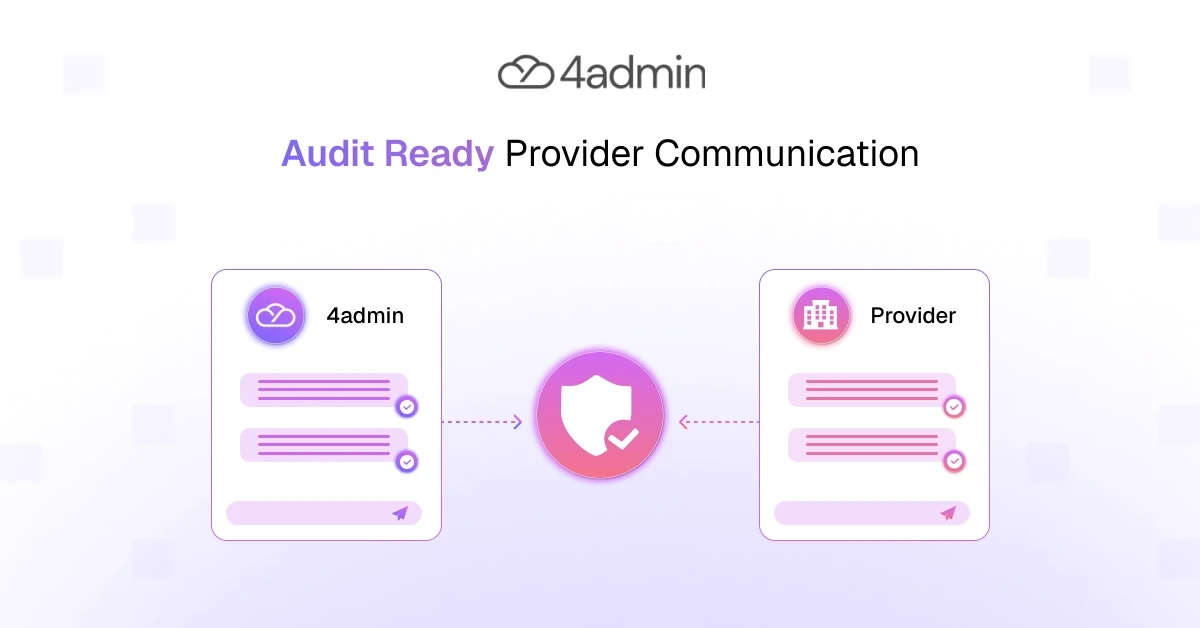
Audit-ready provider communication means maintaining a complete and usable communication history for every provider case.
The case history should show:
Who acted
What was sent or requested
When the action happened
What the provider returned
Which information remained outstanding
What follow-up or next action was required
Provider correspondence should also be connected to the supporting documents, case status, follow-ups and user actions that relate to it. This is what an FCA audit trail requires in practice: not only the messages themselves, but the context that explains them.
Simply storing messages is not the same as maintaining a usable audit trail. An inbox may contain an email, but it may not show how that email affected the case, whether the information was complete or what happened next. Similarly, a document in a shared folder may not reveal when it was received, which provider response it came from or whether it was used during the advice process.
Audit-ready case files bring this information together. They give operations, advisers and compliance teams a clear activity history that supports FCA compliance obligations, file reviews, complaints handling and compliance reporting, without requiring admin teams to rebuild the evidence trail manually.
How to Keep Provider Communication Audit-Ready Without Slowing Admin
Follow these six steps to keep provider communication audit-ready without slowing admin:
1. Capture Every Communication in the Case History
The first step is to capture provider communication as the work happens.
Provider requests, responses, chasers and case updates should be automatically recorded against the correct client, provider and case wherever possible. This reduces reliance on administrators remembering to copy correspondence into a CRM or update a separate communication log.
Each record should include essential regulatory evidence, such as:
Timestamps
User actions
Documents sent or received
Communication type
Provider details
Outcome
Next action
Emails, telephone notes and documents should remain connected to the wider case history. This creates a clear record and prevents provider correspondence from becoming detached from the work it relates to.
2. Standardise Routine Provider Correspondence
Many provider communications are repetitive. Advice firms regularly send LOA submissions, provider-pack requests, valuation requests, missing-information chasers, status updates and escalation messages.
Approved templates can make this communication faster and more consistent. Names, policy numbers, dates and provider references can be populated from the case information, reducing manual data entry and the risk of incomplete or inconsistent messages.
Routine communication should not require individual approval every time it is sent. Firms can pre-approve standard messages and route only unusual, sensitive or higher-risk cases for manual review.
This keeps compliance controls proportionate. It also allows admin teams to move straightforward cases forward without creating unnecessary approval bottlenecks.
3. Automate Chasing While Keeping Ownership Clear
Provider chasing is a major source of administrative work. Follow-ups are often tracked in spreadsheets, inbox reminders or personal task lists, making it difficult to see whether the provider has been contacted or who owns the next action.
Follow-ups can instead be triggered by case activity, including:
No provider response after a set period
Missing documents
Incomplete provider packs
Unresolved information requests
Approaching internal deadlines
Each case should also have a clear owner. This reduces duplicated chasers and avoids uncertainty over who should act next.
Routine follow-ups can continue automatically, while exceptions are escalated to the relevant administrator or operations team. Every chaser and escalation should be recorded in the activity history, including when it was sent, what triggered it and whether manual intervention was required.
4. Connect Provider Correspondence and Supporting Documents
Provider correspondence and supporting documents should form part of one case history.
The record should show when information was requested, when it was received and which provider response supplied it. Documents should be linked to the relevant communication rather than stored independently in folders with little surrounding context.
This is particularly important when the case relies on valuations, charges, guarantees, policy details or other information extracted from provider packs. The firm should be able to preserve the source of each figure and show where the information came from.
The communication history should also be searchable by:
Client
Provider
Case
Communication type
Date
User action
This gives advisers, administrators, operations and compliance teams access to the same provider communication records without relying on individual staff knowledge.
5. Cross-Check Case Files Before Gaps Cause Delays
Instant cross-checking helps firms identify incomplete case files while work is still ongoing.
The workflow can flag missing provider correspondence, documents that have not been received, actions without supporting evidence and incomplete communication logs.
Provider packs can also be checked for missing information, including:
Valuations
Charges
Guarantees
Policy details
Required supporting documents
The outstanding information can then be recorded and the correct provider follow-up triggered.
This prevents incomplete files from reaching review, advice, transfer or replacement-business stages. It also reduces last-minute evidence gathering and the need for administrators to return to providers after the case has already progressed.
6. Make Audit Readiness Continuous
Audit readiness should be part of everyday case handling rather than a separate exercise completed before a review.
Firms can use lightweight periodic sampling to review active and completed cases. These checks can confirm whether timestamps, templates, provider correspondence, follow-ups and supporting evidence are being captured correctly.
Where recurring gaps appear, the firm should improve the workflow rather than repeatedly repair individual files. This may involve:
Updating communication templates
Adjusting follow-up triggers
Improving escalation rules
Correcting document management processes
Clarifying ownership
Continuous readiness makes compliance reporting more reliable because regulatory evidence is built during normal administration rather than through separate record keeping. It also reduces the operational disruption caused by large evidence-gathering exercises.
Why Provider Communication Records Often Become Incomplete
Here's how provider communication ends up scattered across a firm, leading to a weak audit trail and slower admin:
Communication Is Spread Across Multiple Channels
Provider communication may be held across:
Individual inboxes
Provider portals
Spreadsheets
Shared folders
Telephone calls
Handwritten notes
Each channel may contain only part of the case history. Without a connected record, teams must search several locations to understand what happened.
Admin Teams Rely on Manual Logging
Administrators may be expected to copy emails into systems, write call notes, update communication logs, save documents into the correct folders and re-key dates, references and case updates.
These tasks are easy to delay or miss when workloads increase. Manual record keeping also creates duplication because the same information may be entered into several systems.
Follow-Ups Are Tracked Separately
Chasing dates are often held in spreadsheets or personal task lists. This limits visibility over whether follow-ups happened and can create inconsistent escalation between team members.
When responsibility is unclear, providers may be contacted twice or not contacted at all.
Case Evidence Is Reconstructed After the Event
During a file review or complaint investigation, admin teams may need to search for emails, documents and call notes to rebuild the communication history.
Missing timestamps, user actions or supporting documents can make it difficult to prove why a case was delayed, what information was outstanding or what action the firm took.
The Admin Cost of Reactive Audit Preparation
Reactive audit preparation creates work that adds little value to the client or the case.
The cost can include:
Time spent gathering emails, documents and call notes
Duplicate record keeping across multiple systems
Interruptions during compliance reviews
Delays during complaint investigations
Increased risk of incomplete case files
Greater reliance on individual staff knowledge
Slower responses to advisers, clients and compliance teams
The issue is not only whether the evidence exists. It is whether the firm can retrieve, understand and cross-check it without disrupting normal administration.
How 4admin Keeps Provider Communication Audit-Ready Without Slowing Admin
The firm remains data controller. Provider correspondence is sent and received through the firm's own Microsoft 365 environment, so the record sits inside the firm's own systems rather than in a separate platform.
From there, 4admin helps advice firms keep provider communication, documents and case activity together through:
Centralised records: Link correspondence, documents and follow-ups to the correct case.
Automated activity history: Capture timestamps, user actions, requests, responses and chasers.
Standardised workflows: Use repeatable processes for LOA, provider-pack, transfer and replacement-business cases.
Automated chasing: Trigger routine follow-ups and alert staff only when manual action is needed.
Instant cross-checking: Identify missing information and incomplete provider packs early.
Clear visibility: Give advisers, admin, operations and compliance teams one view of the case.
Together, these help firms maintain a complete audit trail without adding more manual admin.
Audit-Ready Provider Communication Checklist
An audit-ready case should confirm that:
All provider correspondence is linked to the correct case
Every action has a timestamp
User actions are recorded
Routine communication uses approved templates
Follow-ups are triggered and logged automatically
Missing information is flagged during the case
Supporting documents are connected to the relevant communication
Compliance can review the full case history without asking admin to rebuild it
Conclusion
Audit-ready provider communication without slowing admin does not come from more spreadsheets, manual communication logs or retrospective evidence gathering.
Advice firms can strengthen their audit trail by capturing provider correspondence, actions, documents and follow-ups within the normal workflow. This creates audit-ready case files that are easier to review, search and evidence.
When the case history is created automatically, stronger regulatory evidence and faster administration no longer compete with each other. They become part of the same controlled provider workflow.
Frequently Asked Questions
How can firms capture provider communication without adding admin work?
Capture can be automated by linking emails, call notes and documents directly to the case record as they happen. Timestamps and user actions are logged at the same time, so nothing depends on an administrator remembering to update a separate log.
What should an audit-ready case file include?
It should include all provider correspondence, timestamps, user actions, the templates used, the follow-ups triggered and any missing-information flags raised during the case. Supporting documents should be connected to the communication they relate to, rather than stored separately.
What tools help automate provider communication tracking?
4admin centralises records, automates the activity history, standardises workflows and triggers follow-ups, with instant cross-checking of case files. The audit trail is built as the work happens rather than assembled afterwards.
How do I know if my firm's provider communication is audit-ready?
Work through the checklist above. Confirm that all correspondence is linked to a case, every action is timestamped, routine communication uses approved templates, follow-ups are automated and logged, missing information is flagged during the case, and documents are connected to the relevant communication.
Can audit readiness be achieved without slowing down admin teams?
Yes. Embedding the audit trail into normal workflow through automation, standardised templates and automated chasing removes the need for manual logging or post-event reconstruction, so the evidence is created as a by-product of the work.
Book a demo with 4admin to see how your firm can keep provider communication audit-ready while reducing manual admin. Book a demo with 4admin.
Ready to automate your admin processes?
Learn how you can reduce admin backlog, ensure compliance, and increase capacity.