
If you’re still treating AI as a future trend in financial advice, you’re already behind.
According to a FCA survey, 75% of UK firms using AI are already applying it in some form across operations, analytics, or client servicing.
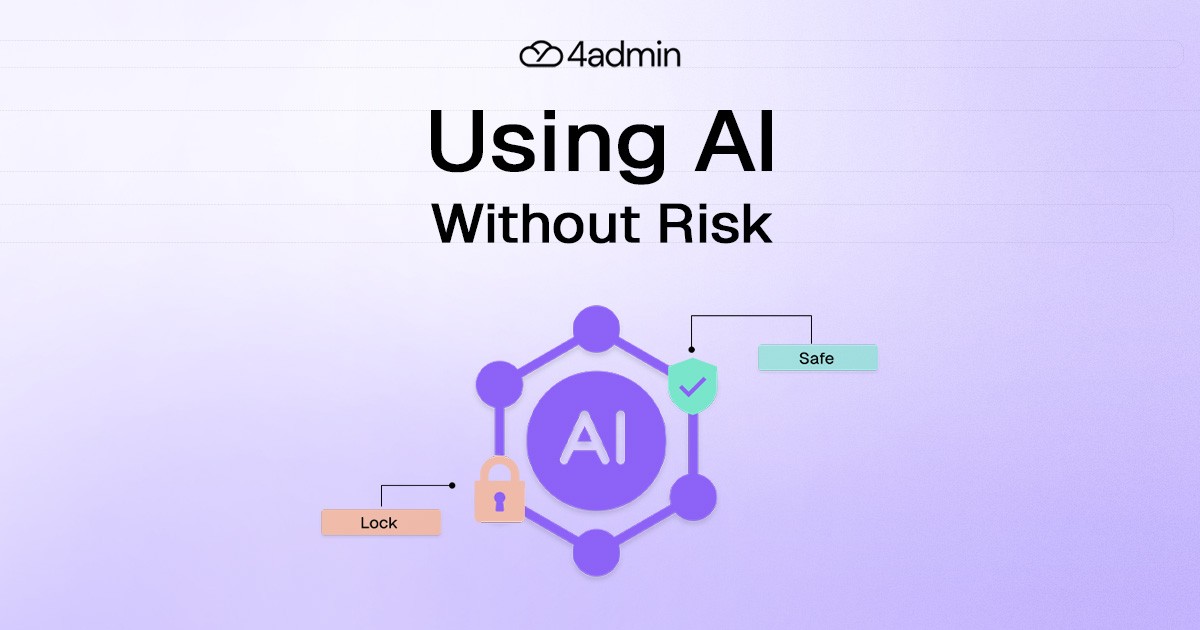
But adoption comes with a hard question: how do advisers harness AI without compromising the trust on which their business is built? When client data is involved, speed and efficiency mean nothing unless privacy, security, and regulatory accountability come first.
This guide explains how advisers can adopt AI responsibly, securely, and in a way that strengthens trust rather than putting it at risk.
The Core Goal of Secure AI Use in Financial Advice
The goal of secure AI use in financial advice is not innovation for its own sake. It is control.
Firms must ensure that:
Client data is protected at every stage
AI use aligns with GDPR and FCA Consumer Duty expectations
Decisions remain explainable and auditable
Accountability stays with the firm, not the technology
AI should expand operational capacity without expanding risk.
Key Strategies for Using AI Securely in Advice Firms
Use Only Approved and Vetted AI Tools
Not all AI tools are built for regulated environments.
Secure AI tools for financial planning should be:
Purpose-built for professional services
Designed with data protection advisers in mind
Transparent about how data is processed and stored
Consumer-first AI tools often introduce hidden risks through unclear data usage, third-party dependencies, and weak access controls.
Understand How AI Vendors Handle Your Data
Before adopting any AI platform, firms must understand:
Whether data is used to train models
Where data is stored and processed
How long data is retained
What happens to data after contract termination
Clear data policies supported by UK-based servers significantly reduce regulatory risk and simplify oversight.
Apply Data Minimisation, Anonymisation, and Masking
One of the most effective AI security controls is using less data.
Data minimisation and purpose limitation mean:
Only processing data strictly required for the task
Masking personal identifiers where possible
Avoiding unnecessary exposure of client information
As a result, the impact of any potential breach is significantly reduced and GDPR principles are consistently upheld.
Use Secure Infrastructure and Deployment Models
Ensure that any AI applications used operate on secure cloud infrastructure with enterprise-grade protections, including:
Data encryption at rest and in transit
Strong access controls
Two-factor authentication for users
Isolated environments for processing sensitive data
Security certifications such as Cyber Essentials Plus, ISO27001 and SOC 2 offer additional reassurance mechanisms where controls can be independently validated.
Maintain Ongoing Oversight and Auditing
Secure AI use is not a one-time decision.
Firms should ensure:
Continuous monitoring of AI outputs
Clear audit trails showing how data was processed
Regular reviews of vendor security practices
Defined data breach protocols
Oversight remains indispensable if you want to make sure the AI you're using remains observable, explainable, and accountable at all times.
How to Safely Adopt AI in Advice Firms (Step-by-Step)
Step 1: Map data flows and classify sensitivity
Begin with the identification of the systems through which your client's data enters, flows, and exits. Categorise data based on sensitivity and regulatory exposure.
Step 2: Approve low-risk, back-office use cases
Incorporate back-office automation where risk is the lowest, such as in respect of document processing, workflow triage, or administrative analysis. Try to avoid decision-making use cases in the early phases.
Step 3: Enforce security controls and governance
Before rollout, apply access controls, data retention policies, and approval processes. Mapping out a defined AI governance framework should be the first priority.
Step 4: Pilot with human oversight
Review AI outputs by trained staff during piloting phases. Human oversight is essential to ensure errors are caught and model behaviour is understood.
Step 5: Review, audit, and update policies regularly
Technology seems relentless when it comes to changes, and it does evolve quickly. Regularly review your policies, risk assessments, and controls to ensure they remain up-to-date and effective.
What Security Controls Advisers Should Expect from Any AI Tool
Any AI vendor working with advice firms should provide:
Strong data encryption standards
Clear access controls and permissioning
Detailed audit trails
Defined data retention and deletion policies
Transparent incident response processes
If these controls are unclear or undocumented, the risk is already too high.
Governance and Policy Matter More Than the Tool Itself
AI Usage Policies and Staff Training
Even the most secure technology can be undermined by poor usage.
Firms need clear AI usage policies covering:
Approved use cases
Prohibited activities
Client consent considerations
Escalation paths for issues
Staff training ensures consistent, compliant use across the firm.
Use-Case Governance and Risk Rating
Each AI use case should be risk-rated based on:
Data sensitivity.
Client impact.
Regulatory exposure.
High-risk use cases require stronger controls and more frequent review.
Regulatory Alignment and Adviser Accountability
GDPR Responsibilities in AI Workflows
GDPR applies regardless of whether processing is manual or automated.
Firms remain responsible for:
Lawful processing
Data minimisation
Purpose limitation
Transparency and client consent
AI does not reduce accountability. It increases the need for clarity.
FCA Consumer Duty Expectations
Under FCA Consumer Duty, firms must demonstrate that:
AI supports good client outcomes
Processes remain fair and explainable
Errors are identified and corrected quickly
Opaque or ungoverned AI use is incompatible with these expectations.
Evaluating AI Vendors: A Practical Due Diligence Checklist
When assessing vendors, firms should review:
Security certifications and standards
Data usage and training policies
Access controls and monitoring
Auditability and transparency
Exit terms, data deletion, and portability
Strong vendor due diligence reduces long-term risk and avoids future remediation costs.
Operational Guardrails Firms Should Put in Place
Effective guardrails include:
Role-based access controls
Mandatory human review points
Regular risk assessments
Documented governance decisions
Clear ownership of AI outcomes
These measures ensure AI enhances operations without weakening control.
Using AI Securely in Back-Office Workflows with 4admin
4admin is designed for secure back-office automation in regulated advice firms.
It focuses on:
Processing documents without unnecessary data exposure
Operating within controlled workflows
Supporting auditability and transparency
Reducing reliance on manual handling of sensitive data
By keeping your AI use limited and regulated using clearly defined operational guardrails, firms are able to gain efficiency without putting security at stake.
Transparency Builds Trust (Internally and Externally)
Transparency matters for both staff and clients.
When teams understand how AI is used, trust increases. When clients are informed appropriately, confidence grows. Clear communication supports accountability and reinforces professional standards.
AI, Risk, and Professional Indemnity Insurance
Firms should consider how AI use interacts with professional indemnity insurance.
This includes:
Declaring AI use where required
Ensuring controls align with insurer expectations
Demonstrating active risk management
Secure, governed AI use is easier to defend than informal or random experimentation.
Common Pitfalls to Avoid
Common mistakes include:
Using consumer AI tools without approval
Failing to document data flows
Ignoring vendor data policies
Assuming automation removes accountability
Treating AI as an IT issue rather than a governance issue
Most AI risks are process failures, not technical ones.
Final Thoughts
AI isn’t the ultimate risk factor that is holding you back from adopting it in your firm. Using it carelessly is.
The firms seeing real value aren’t chasing speed at any cost. Rather, they’re building AI into their regulated infrastructure with proper controls, oversight, and accountability. Make sure to get the foundations right, and AI in turn, doesn’t weaken trust but strengthens it.
The winning firms don’t cut corners. They set guardrails, choose secure tools, and keep humans firmly in charge.
Because in financial advice, innovation only works when trust comes first, and always stays there.
Frequently Asked Questions
Is AI safe for financial advice firms?
Yes, AI is safe for financial advice firms when adopted through strong governance, secure infrastructure, and appropriate controls.
How can advisers use AI without breaching GDPR?
By applying data minimisation, clear purpose limitation, and maintaining accountability for all processing.
What data security risks does AI introduce?
Risks may include data leakage, unclear vendor practices, and lack of auditability if controls are weak.
Does using AI affect FCA Consumer Duty obligations?
Yes. Firms must make sure AI models support good client outcomes and remain explainable and fair to stay clear of any arbitrariness.
Can AI be used without storing client data?
In many cases, yes. Especially for back-office workflows using anonymised or masked data.
Are UK-based servers important for compliance?
They simplify data residency and regulatory oversight, particularly for UK advice firms.
What certifications matter for AI providers?
Cyber Essentials Plus, SOC 2 and ISO27001 certifications are strong indicators of dependable security practices.
Should clients be informed when AI is used?
Where AI materially affects service delivery, informing your clients helps maintain trust and compliance.
Ready to automate your admin processes?
Learn how you can reduce admin backlog, ensure compliance, and increase capacity.